

Radiation resistance is a crucial factor to consider when it comes to overhead service cables. As a leading supplier of Overhead Service Cable, we understand the significance of these properties and their impact on the performance and longevity of the cables. In this blog post, we will delve into the radiation - resistance properties of overhead service cables, exploring what they are, why they matter, and how our products stand out in this regard.
Understanding Radiation and Its Impact on Cables
Radiation comes in various forms, including ultraviolet (UV) radiation from the sun, electromagnetic radiation from power lines and other electrical sources, and even ionizing radiation in certain industrial or high - energy environments. Each type of radiation can have different effects on overhead service cables.
UV radiation, for example, is a common concern. Prolonged exposure to sunlight can cause the outer insulation of the cable to degrade. The UV rays break down the chemical bonds in the insulation material, leading to cracking, brittleness, and loss of flexibility. This not only compromises the mechanical integrity of the cable but also reduces its electrical insulation properties, increasing the risk of short - circuits and other electrical failures.
Electromagnetic radiation can also interfere with the normal operation of the cable. High - frequency electromagnetic fields can induce unwanted currents in the cable, which may cause signal interference in communication cables or power losses in power transmission cables. In extreme cases, it can even lead to overheating and damage to the cable components.
Ionizing radiation, such as that found in nuclear power plants or some medical facilities, is more severe. It can cause direct damage to the molecular structure of the cable materials, leading to rapid degradation and loss of functionality.
Radiation - Resistance Properties of Overhead Service Cables
To combat the negative effects of radiation, overhead service cables are designed with specific radiation - resistance properties. These properties are mainly achieved through the selection of appropriate materials and the use of advanced manufacturing techniques.
Material Selection
The choice of insulation material is critical for radiation resistance. For UV radiation, materials such as cross - linked polyethylene (XLPE) and ethylene propylene rubber (EPR) are commonly used. XLPE has excellent UV resistance due to its cross - linked molecular structure, which provides enhanced stability and durability. EPR also offers good resistance to UV rays and is known for its flexibility and resistance to environmental stress cracking.
In the case of electromagnetic radiation, cables may be shielded with conductive materials. Copper or aluminum shielding can effectively reduce the impact of electromagnetic interference by redirecting the electromagnetic fields away from the cable core. This shielding not only protects the cable from external electromagnetic radiation but also prevents the cable from emitting electromagnetic signals that could interfere with other devices.
For ionizing radiation, specialized materials are required. Some cables use radiation - resistant polymers that can withstand high levels of ionizing radiation without significant degradation. These polymers are often formulated with additives that can absorb and dissipate the energy of the ionizing particles, protecting the cable's internal structure.
Manufacturing Techniques
Advanced manufacturing techniques also play a role in enhancing the radiation - resistance properties of overhead service cables. For example, extrusion processes can ensure a uniform thickness of the insulation layer, which is essential for consistent radiation protection. Coating the cable with a protective layer can also provide an additional barrier against radiation.
Our Company's Approach to Radiation - Resistant Overhead Service Cables
As a supplier of Overhead Service Cable, we are committed to providing high - quality cables with excellent radiation - resistance properties. Our R & D team constantly explores new materials and manufacturing processes to improve the performance of our cables.
We use only the highest - quality insulation materials, carefully selected for their radiation - resistance capabilities. Our XLPE and EPR insulation materials are tested rigorously to ensure they meet or exceed industry standards for UV resistance. In addition, our cables are equipped with effective shielding to protect against electromagnetic radiation.
For customers in high - radiation environments, such as nuclear power plants or research facilities, we offer specialized cables with enhanced radiation - resistant polymers. These cables are designed to withstand extreme levels of ionizing radiation, ensuring reliable operation even in the most challenging conditions.
Applications and Benefits of Radiation - Resistant Overhead Service Cables
The radiation - resistant properties of our overhead service cables make them suitable for a wide range of applications.
Power Transmission
In power transmission systems, radiation - resistant cables are essential for ensuring reliable and efficient power delivery. UV - resistant cables can withstand long - term exposure to sunlight, reducing the need for frequent cable replacements. Electromagnetic - shielded cables can minimize power losses and interference, improving the overall performance of the power grid.
Telecommunications
In the telecommunications industry, radiation - resistant cables are crucial for maintaining clear and reliable communication signals. UV - resistant cables can protect against signal degradation caused by sunlight, while electromagnetic - shielded cables can prevent interference from other electrical devices.
Industrial Applications
In industrial settings, especially those with high - energy sources or ionizing radiation, radiation - resistant cables are necessary for safety and reliability. Our specialized cables can withstand the harsh conditions of industrial environments, ensuring continuous operation of critical equipment.
Comparison with Other Types of Cables
When comparing our overhead service cables with other types of cables, such as Multi Core Control Cable and Aluminum Service Drop Cable, the radiation - resistance properties of our overhead service cables are a significant advantage.
Multi - core control cables are often used for control and monitoring purposes. While they may have their own set of features, our overhead service cables offer better radiation resistance, especially in outdoor environments where they are exposed to sunlight and other forms of radiation.
Aluminum service drop cables are commonly used for power distribution from the utility pole to the building. Our overhead service cables, with their superior radiation - resistance properties, can provide a more reliable and long - lasting solution, reducing the risk of cable failure due to radiation - induced degradation.
Conclusion
The radiation - resistance properties of overhead service cables are of utmost importance for ensuring the reliable and long - term operation of electrical and communication systems. As a supplier of Overhead Service Cable, we are dedicated to providing high - quality cables that can withstand the challenges posed by different types of radiation.

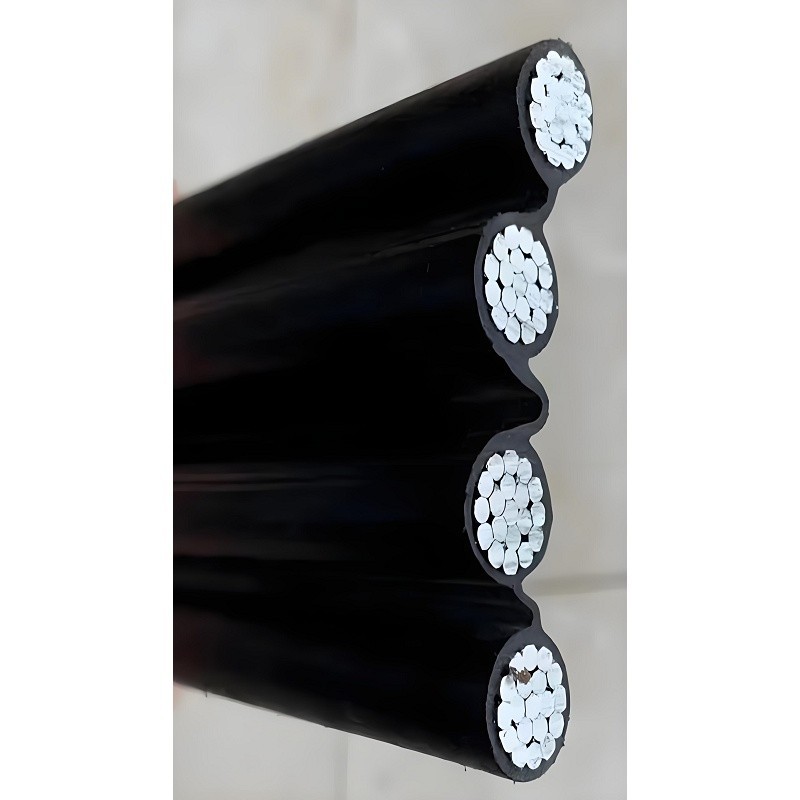
If you are in need of overhead service cables with excellent radiation - resistance properties, we invite you to contact us for a detailed discussion. Our team of experts is ready to assist you in selecting the right cable for your specific needs. Whether you are involved in power transmission, telecommunications, or industrial applications, we have the solutions to meet your requirements.
References
- "Electrical Power Cable Engineering" by John W. McPartland
- "Handbook of Polymer Science and Technology" edited by Herman F. Mark, et al.
- Industry standards and guidelines related to cable manufacturing and radiation resistance.