

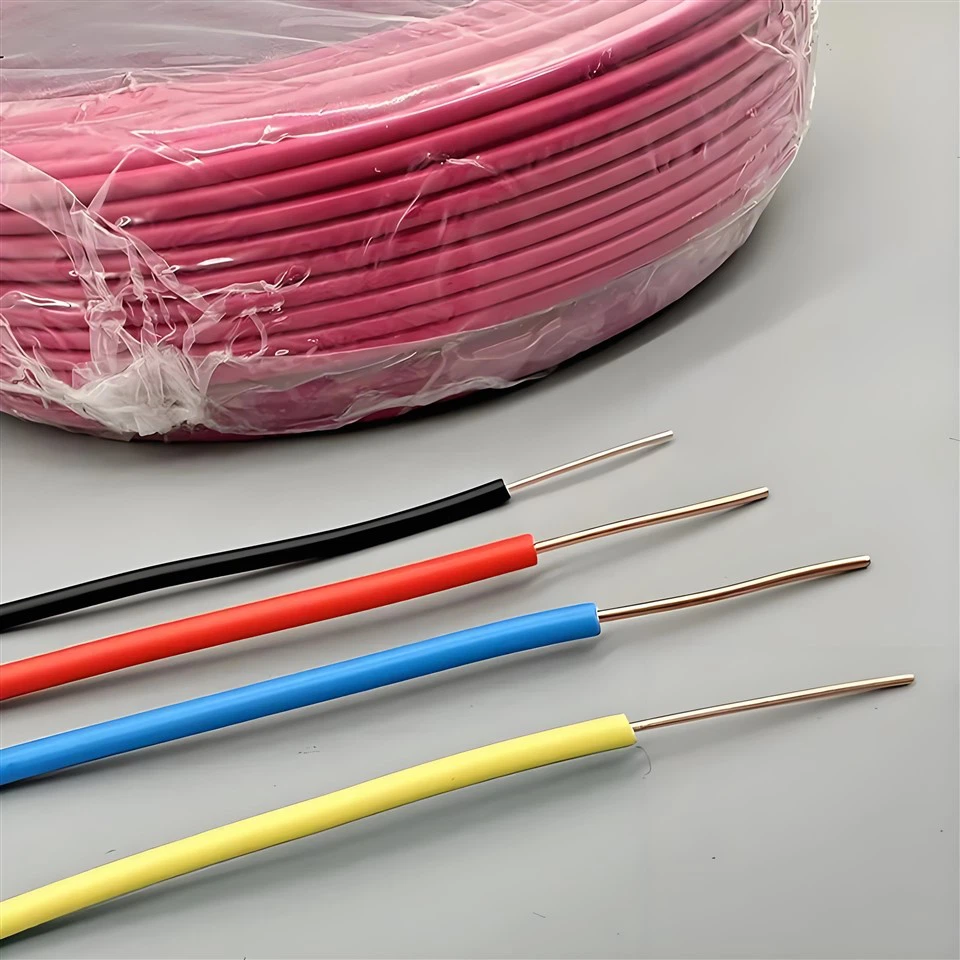
Yo, what's up! I'm a supplier of Single Core Building Wire, and today I wanna talk about the insulation materials for single core building wire.
Let's start with why insulation is so crucial. Insulation in single core building wires serves as a protective layer. It prevents the flow of electric current from leaking out, which is not only essential for the proper functioning of electrical systems but also for safety. Without proper insulation, there could be short - circuits, electrical shocks, and even fires.
PVC (Polyvinyl Chloride)
One of the most commonly used insulation materials is PVC. PVC is super popular because it's relatively inexpensive. It's also flexible, which makes it easy to work with when installing single core building wires. You can bend and shape it according to your needs without much hassle.
The durability of PVC is another great feature. It can withstand a certain amount of wear and tear, and it's resistant to a variety of chemicals. This means that it can last a long time in different environments. For instance, in a normal household setting, PVC - insulated single core wires can serve for decades without significant degradation.
However, PVC does have its drawbacks. At high temperatures, it can start to break down and release toxic fumes. This is a major concern in case of a fire. So, in some high - risk areas, other insulation materials might be preferred. You can check out our Single Core Building Wire products with PVC insulation on our website.
XLPE (Cross - Linked Polyethylene)
XLPE is a high - performance insulation material. It offers better electrical properties compared to PVC. The cross - linked structure gives it excellent thermal stability. It can handle much higher temperatures without degrading.
This makes XLPE - insulated single core wires ideal for applications where there's a lot of heat generated, like in industrial settings or high - power electrical systems. It also has good resistance to moisture, which is important in areas with high humidity.
The only downside is that XLPE is more expensive than PVC. But if you're looking for long - term reliability and performance in demanding environments, the extra cost is often worth it. We also have Flexible Building Wire with XLPE insulation that can meet your specific needs.
Rubber
Rubber is a classic insulation material. Natural rubber and synthetic rubber are both used in single core building wires. Rubber is extremely flexible, which is great for applications where the wire needs to be bent or moved around a lot.
It has good electrical insulation properties and is also resistant to abrasion. This makes it suitable for outdoor applications where the wire might be exposed to rough surfaces.
However, rubber can degrade over time, especially when exposed to sunlight and ozone. So, it's often used in combination with other protective layers to increase its lifespan. Our Indoor Copper Building Wire sometimes uses rubber insulation for indoor applications where flexibility is key.
Teflon (Polytetrafluoroethylene - PTFE)
Teflon is a high - end insulation material. It has outstanding electrical properties, with very low dielectric constant and loss. This means that it can transmit electrical signals with very little loss, which is crucial in high - frequency applications.
Teflon is also extremely resistant to heat, chemicals, and moisture. It can operate at very high temperatures without losing its insulation properties. But, as you might expect, Teflon is quite expensive. It's usually used in specialized applications like aerospace, high - end electronics, and some critical electrical systems.

Mineral Insulation
Mineral - insulated cables use magnesium oxide (MgO) as the insulation material. These cables are known for their high fire resistance. In case of a fire, the mineral insulation can maintain its integrity for a long time, allowing the electrical system to keep functioning.
They also have excellent mechanical strength and can withstand high temperatures. Mineral - insulated single core wires are often used in fire - safety systems, industrial plants, and other high - risk areas.
Choosing the Right Insulation Material
When choosing the insulation material for single core building wire, there are several factors to consider. First, think about the environment where the wire will be installed. If it's an outdoor area with high humidity, you'll want a material that's resistant to moisture, like XLPE.
The temperature requirements are also important. If the wire will be in a high - heat environment, materials like Teflon or XLPE are better choices. Cost is another factor. If you're on a tight budget, PVC might be the way to go, but if you need high - performance and long - term reliability, you might have to invest in more expensive materials.
As a supplier of single core building wire, I can help you make the right choice based on your specific needs. Whether you're a contractor working on a new building project or a homeowner doing some electrical work, we have a wide range of products with different insulation materials to meet your requirements.
If you're interested in our single core building wire products or have any questions about the insulation materials, feel free to reach out. We're here to help you make the best decision for your electrical needs. Let's have a chat and see how we can work together to get you the right wire for your project.
References
- Electrical Insulation Handbook, McGraw - Hill
- National Electrical Code (NEC)
- IEEE Standards for Electrical Insulation